What an airport's power monitor taught us about uptime.
Uptime as a marketing word is meaningless - every vendor claims it. Uptime when an airport's air-traffic and navigation power cannot fail silently is something else: a discipline you commit to from the first line of code. This is a field note on what that discipline actually looks like, drawn from monitoring critical power at two international airports - and why the same posture is exactly what an ordinary order pipeline or till network quietly needs.
When "uptime" isn't a slide
Picture the failure that keeps the people responsible for an airport awake: not the outage itself, but the not knowing. The power feeding air-traffic control and communications-navigation-surveillance systems drifts, degrades, and then drops - and the first anyone hears of it is when something downstream goes dark. At that stakes, "uptime" isn't a number on a sales deck. It's the difference between a quiet Tuesday and an incident report.
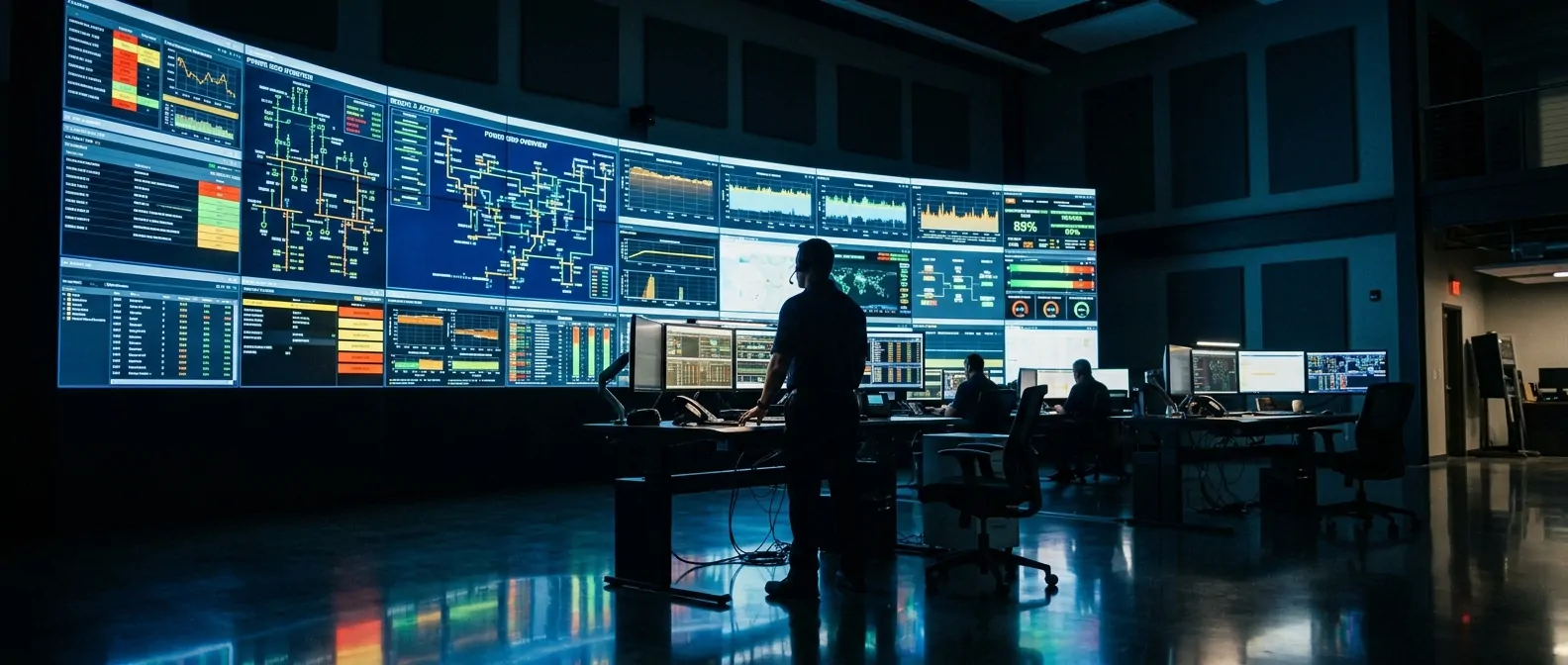
That is the environment our critical-power monitoring runs in, live today, at two international airports - Navi Mumbai and Bhogapuram (Alluri Sitarama Raju International). The job is not glamorous. It is to watch the electrical health behind the systems that cannot lose power unnoticed, and to make sure a human knows the moment anything moves in the wrong direction. Working there recalibrates what the word "reliable" is allowed to mean.
Visibility before heroics
The first lesson is unromantic: you cannot keep up what you cannot see. Before centralized monitoring, electrical health is a scatter of isolated readouts and manual rounds - someone walking to a panel, reading a gauge, writing it down. That works right up until the one shift it doesn't, and by then the gap between "a problem started" and "a person found out" is measured in whatever the walking interval happened to be.
Continuous, centralized visibility replaces heroics with awareness. One dashboard, every critical parameter, refreshed constantly - for the LPG terminal work in the same programme the readings refresh on roughly a one-second cadence. The point isn't the speed for its own sake; it's that nobody has to go looking to know the truth. The system's health is simply present, all the time, in one place. Heroics are what you need when you were blind; visibility is what makes heroics unnecessary.
Alarm on the drift, not the disaster
The second lesson is about when you find out. A monitor that tells you power has failed is a smoke detector that goes off after the house has burned. The value is in catching the moment health starts to drift - the reading trending the wrong way, the parameter easing out of its safe band - and raising an alarm then, while it's still a maintenance task and not an emergency.
That is the whole difference between a non-event and an incident. Immediate alarms on drift turn "we lost power to a critical system" into "we replaced a component on a Tuesday morning because a threshold was crossed." Reliability, in practice, is mostly a series of quiet interventions that no one outside the control room ever hears about - and that quiet is the product.
"Reliability is mostly a series of quiet interventions nobody outside the control room ever hears about. The quiet is the product."
- The Silex Softwares team
Reliability is repeatable or it's luck
Here is the insight that surprised us most, and it's the one we'd underline for any buyer: a system that works reliably once isn't reliable - it's lucky. The proof that we'd built reliability rather than pulled off a heroic one-off was that the same platform deployed cleanly at the second airport. Not rebuilt from scratch, not re-improvised under pressure - the same proven product, re-deployed site to site.
The same blue-chip partnership stands behind our railway-fuelling work: monitoring the fuelling of more than 200 million litres across six BPCL rail depots, live since 2021. Across airports, terminals and depots the pattern holds - reliability that survives redeployment is engineered; reliability that only holds at one site was an accident waiting to be found out. If you can't redeploy it, you didn't really build it.
The stack is boring on purpose
People expect the software behind critical infrastructure to be exotic. It's the opposite, deliberately. A .NET Windows service acquires the data. An ASP.NET Core dashboard presents it. One SQL Server database holds a single source of truth per site. That's the shape, and its virtue is precisely that there's nothing clever to go wrong: it's observable, it's recoverable, and any competent engineer can reason about it at 2 a.m.
Boring is a feature when failure is not an option. Every part of that stack is chosen so that when something does go sideways, you can see it, understand it, and put it back - not admire how ingenious it was. The exotic architectures are the ones that fail in ways nobody on the team can debug. We build the uninteresting kind on purpose.
Who stays on it
Reliability is not a launch-day checkbox - it's a staffing posture that has to hold for years. The same senior team that built these systems still runs them. A monitor is only as trustworthy as the people who keep it patched, watched and understood long after the ribbon-cutting; longevity is a decision you keep making, not a milestone you pass once.
Worth being honest about the division of labour, because it's where credibility lives: this is delivered with Spectrum Technology. Spectrum does the hardware and field instrumentation; Silex builds the software. We don't pretend to string cable or install sensors. Naming the partner isn't a hedge - it's the accurate picture, and the accurate picture is what a serious buyer trusts. And what we build, you own outright: code, data and hosting.
What this means for your business
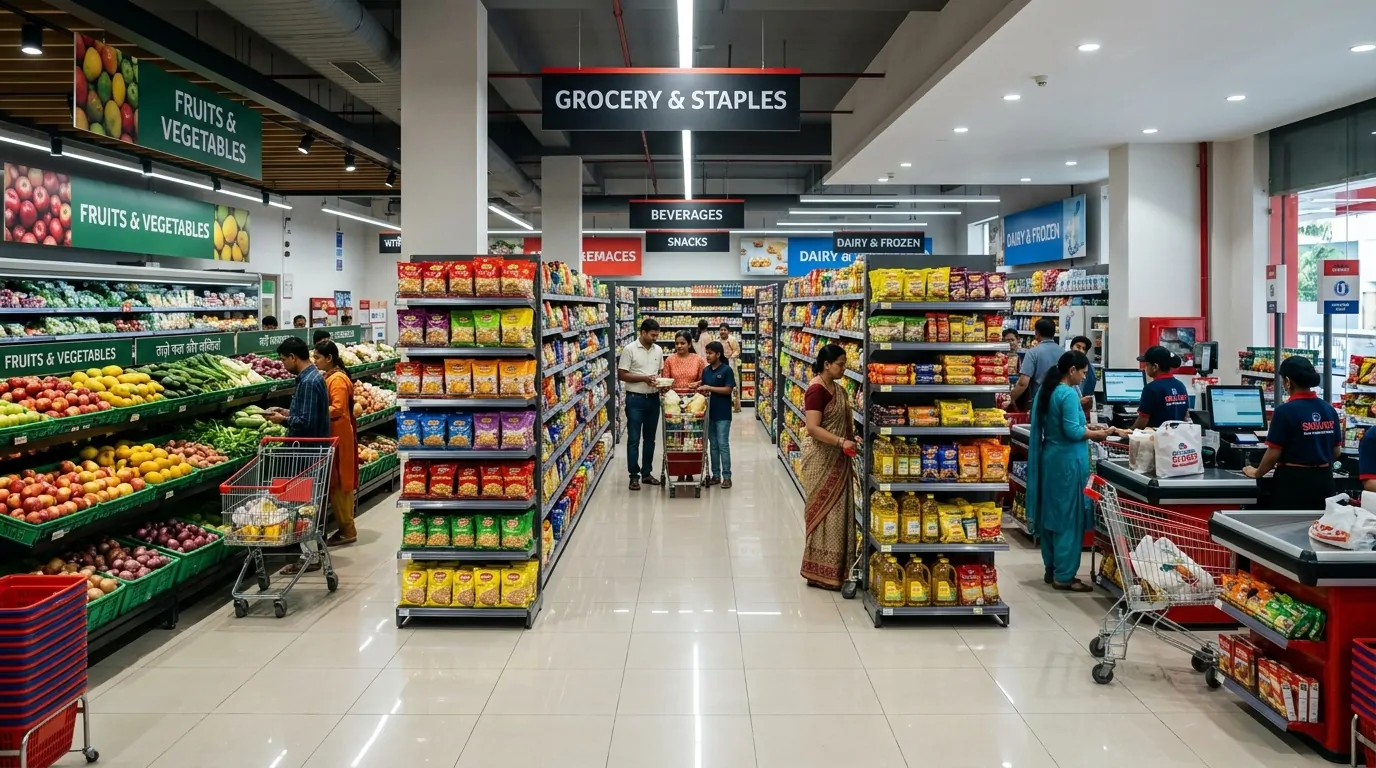
You may never run an airport. But if you run a B2B storefront, a booking engine or a fifty-store till network, you have your own version of power that can't fail silently - an order pipeline that can't drop orders, an inventory truth that can't quietly drift, a checkout that can't go dark on your busiest hour. The stakes differ; the discipline is identical.
Visibility before heroics. Alarm on the drift, not the disaster. A stack boring enough to recover. A team that stays. That's not a story about airports - it's the posture we bring to whatever you can't afford to lose. If you want to know where your platform can fail unnoticed today, that's exactly what a free assessment is for.